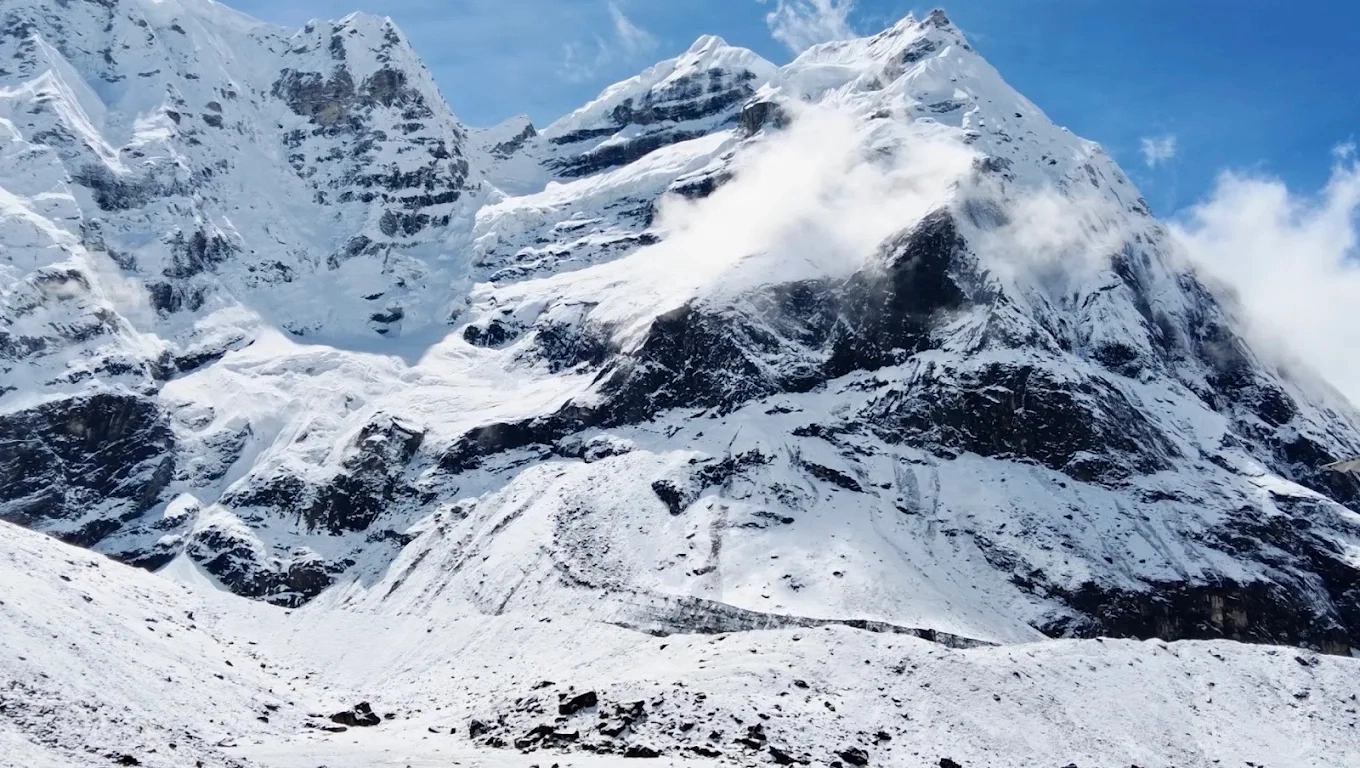
Mera Peak Trekking
Trip Overview
Mera Peak Trekking is one of Nepal's most iconic adventures, combining a remote high-altitude trek with the ascent of the country's highest official "trekking peak" at 6,476 m. While technically straightforward, often described as a glacier walk, it is a serious high-altitude undertaking that rewards trekkers with what is widely considered one of the finest mountain views in the world. From the summit, you can see five of the world's six highest mountains simultaneously: Everest, Lhotse, Cho Oyu, Makalu, and Kanchenjunga, an extraordinary panorama earned through nearly three weeks of genuine Himalayan wilderness.
Mera Peak is ideal for fit trekkers looking to take their first steps into mountaineering: it requires basic use of crampons and ice axes on the glaciated approach to the summit, but does not involve vertical rock or ice climbing. Unlike the crowded Everest Base Camp trail, the route through the remote Hinku Valley is noticeably quieter, passing through pristine rhododendron forest, traditional high pastures, and genuinely remote Sherpa settlements untouched by the busier trekking circuits nearby.
This 22-day package takes you from Zurich to Kathmandu and overland to Phaplu, deliberately avoiding the often-delayed Lukla flight in favor of a quieter, more gradual approach through the Solu region. From Phaplu, the trail climbs through Taksindo and descends to Kharikhola before turning east into the Hinku Valley via Pangkongma, passing through Najing Dingma, Chalem Kharka, and Chunbu Kharka on the way to Kothe and Tangnag, where a dedicated acclimatization day allows time for your body to properly adjust before pushing higher.
From Tangnag, the route climbs to Khare, the base camp for the mountain, and on to Mera La (High Camp) at 5,780 m, before the pre-dawn summit push to Mera Peak itself. After summiting, the route retraces its steps back to Khare and descends via Kothe and Chhatrawa La to Lukla, before returning to Kathmandu via Ramechhap. Combining remote wilderness trekking, genuine Sherpa culture, and one of the most spectacular high-altitude summit views on Earth, Mera Peak Trekking is an excellent choice for adventurous trekkers ready to take on a real Himalayan challenge.
Trip Facts
Itinerary
Your Mera Peak Trekking adventure begins as you check in for your international flight from Zurich, bound for Kathmandu, the vibrant capital of Nepal, nestled in a valley ringed by hills at the edge of the Himalayas. Depending on your routing, the journey may include a layover, giving you time to relax before nearly three weeks of remote high-altitude trekking ahead.
Arrive in Kathmandu and transfer to your 4-star hotel, where a member of our team will meet you and help you settle in after your flight. With the rest of the day free, take time to rest, meet your trekking guide, and review the journey ahead in detail. Given the technical and high-altitude nature of this trip, this is also an important opportunity to check your climbing equipment, confirm any last-minute gear requirements, and pick up remaining supplies from the trekking shops of the Thamel district before departure.
Hike from Phaplu to Taksindo (2,842 m/9,324 ft), climbing steadily through forested hills with fine views back toward the Solu valley and, on clear days, the distant peaks of the greater Everest region beginning to appear on the horizon. The trail passes the historic Taksindo Monastery, one of the important Buddhist sites of the region, offering an early cultural highlight before the trek pushes deeper into more remote territory.
Hike from Taksindo to Kharikhola (2,040 m/6,693 ft), descending through forest and terraced farmland toward the Dudh Koshi valley, passing small settlements along the way, before climbing again to this welcoming riverside village, a popular overnight stop where you'll begin to notice the trail growing quieter and more remote.
Hike from Kharikhola to Pangkongma (2,846 m/9,337 ft), leaving the main Everest trail behind and turning southeast, climbing steadily through terraced fields and forest toward this traditional village. As you gain height, growing views of the Hinku Valley peaks open up ahead, including your first proper glimpse of the twin summits of Mera Peak itself, a striking preview of the journey to come.
Hike from Pangkongma to Najing Dingma (2,600 m/8,530 ft), crossing the Pangkongma La before making a steep descent to a wire suspension bridge over the roaring Hinku Khola, followed by a strenuous climb on the far side into the true Hinku Valley. This marks your entry into genuinely quiet, off-the-beaten-path terrain, with the crowds of the more popular Everest trails now firmly behind you.
Hike from Najing Dingma to Chalem Kharka (3,600 m/11,811 ft), gaining height steadily through pasture and increasingly lush vegetation, crossing the Surke La before reaching this scenic high pasture set among fir trees and rhododendron bushes, a peaceful and atmospheric overnight stop as the trek climbs deeper into remote high-altitude terrain.
Hike from Chalem Kharka to Chunbu Kharka (4,200 m/13,780 ft), continuing through increasingly remote high-altitude terrain deeper into the Hinku Valley, with the vegetation thinning steadily and the surrounding peaks growing more dominant as the trail steadily gains height toward the base of Mera Peak itself.
Hike from Chunbu Kharka to Kothe (3,550 m/11,647 ft), following the Hinku Khola downstream through bamboo and pine forest as the valley gradually widens, with Mera Peak now a prominent and increasingly close presence ahead, marking your entry into the Makalu Barun National Park area that protects this remarkable wilderness.
Spend a full acclimatization day at Tangnag, an essential and non-negotiable step before continuing higher toward Khare and the mountain itself. Use the day to rest, hydrate thoroughly, and, if energy allows, take a short optional walk in the surrounding area to aid the acclimatization process, always at a comfortable pace suited to the altitude, with your guide monitoring how everyone is adjusting.
Hike from Tangnag to Khare (4,900 m/16,076 ft), also known as Mera Base Camp, the final settlement before the mountain and the staging point for your summit attempt. On arrival, your guide will conduct a mandatory equipment and safety briefing, along with a practice session on the use of crampons and ice axes on nearby terrain for those newer to glacier travel, ensuring everyone feels confident before heading higher.
Hike from Khare up onto glaciated terrain to Mera La, also known as High Camp (5,780 m/18,963 ft), a demanding day that brings you to the final overnight stop before the summit push. Accommodation here is in mountain tents, given the extreme altitude and the complete absence of any permanent lodges this high, with the team settling in early to conserve energy for the pre-dawn start ahead.
The highlight of the entire trip: set off in the early hours of the morning for the ascent of Mera Peak (6,476 m/21,247 ft), roped together with your guide and Sherpa team across straightforward but serious glaciated terrain, using crampons and ice axes throughout the climb. From the summit, on a clear day, you'll take in one of the most extraordinary panoramas in the Himalayas, with five of the world's six highest peaks visible simultaneously: Everest, Lhotse, Cho Oyu, Makalu, and Kanchenjunga stretching across the horizon in every direction. After the summit celebration, descend back down through High Camp all the way to Khare/Mera Base Camp (4,900 m/16,076 ft) for a well-earned rest and a long-awaited return to thicker air.
Begin the descent, hiking from Khare back to Kothe (3,600 m/11,811 ft), retracing the trail down through Tangnag with a welcome and increasingly noticeable return to thicker air and warmer temperatures after the demanding summit push, as the vegetation and greenery of the lower valley gradually return.
Hike from Kothe toward Chhatrawa La (4,200 m/13,780 ft), continuing the descent through the Hinku Valley on a route that eventually connects back toward Lukla, offering a final chance to soak in the remote wilderness scenery of this quiet valley before rejoining the busier trails of the wider Khumbu region.
Hike from Chhatrawa La to Lukla (2,840 m/9,318 ft), completing the trekking portion of the journey and arriving back at the famous mountain airstrip that serves as the gateway to the greater Khumbu region, with a well-deserved sense of accomplishment after successfully summiting Mera Peak.
Travel from Lukla to Ramechhap, by flight and/or connecting overland transfer depending on the season's flight scheduling, on the first leg of the journey back toward Kathmandu, leaving the mountains gradually behind as the terrain flattens toward the Terai foothills.
Continue on to Kathmandu, arriving back in the capital with a free day to rest, do some shopping in Thamel, or simply relax and reflect on your successful trek and summit of Mera Peak after nearly three weeks in the mountains, checking back in to the comfort of your 4-star hotel.
Transfer to Tribhuvan International Airport in good time for your international flight home, bringing to a close an extraordinary journey to the summit of Mera Peak and through the remote wilderness of the Hinku Valley.
Arrive back in Zurich, marking the end of your Mera Peak Trekking adventure, with the memory of standing atop one of the world's great viewpoints, surrounded by five of the highest mountains on Earth, staying with you long after the journey ends.
Expedition Cost
What's Included
- International flights: Zurich – Kathmandu – Zurich
- Airport transfers in Kathmandu (arrival and departure)
- 2 nights 4-star hotel accommodation in Kathmandu (Bed & Breakfast basis)
- Private tourist vehicle transfer: Kathmandu–Phaplu
- Return transfer: Lukla–Ramechhap–Kathmandu (flight and/or shared vehicle, depending on season)
- All teahouse/guesthouse accommodation during the lower-altitude trekking days
- Tented camp accommodation with full board at Mera La (High Camp)
- NMA (Nepal Mountaineering Association) Mera Peak Climbing Permit
- Makalu Barun National Park Entry Permit
- Local area permit for the Hinku Valley/Solukhumbu region
- Experienced, licensed trekking guide with mountaineering training, plus climbing Sherpa support for summit day
- Porter service (based on group size)
- Group climbing equipment (ropes, ice screws, and other technical gear for the summit ascent)
- All applicable government and local taxes
What's Excluded
- Nepal entry visa fee
- Specialized mountaineering travel and emergency evacuation insurance covering altitudes above 6,000 m (mandatory; standard trekking insurance is not sufficient)
- Meals in Kathmandu (except breakfast)
- Personal climbing gear, including crampons, ice axe, harness, and helmet
- Personal trekking gear and equipment
- NMA garbage deposit (refundable upon proof of waste management)
- Tips for guide, climbing Sherpa, and porters
- Personal expenses such as bar bills, laundry, and phone calls
- Any costs arising from flight delays or cancellations to/from Lukla or Ramechhap due to weather, or other itinerary changes beyond our control
Fixed Departures
Nov 01, 2026 - Nov 22, 2026
CHF 4900.00 /Person
12 SLOTS REMAINING
May 01, 2027 - May 22, 2027
CHF 4900.00 /Person
12 SLOTS REMAINING